Fintech Onboarding Examples: Revolut, N26 & Cash App
Fintech onboarding examples are rarely about a single welcome screen. They are about how apps collect identity, explain value and earn trust before money moves. This canvas maps Revolut, N26 and Cash App step by step.
Open public canvas: Fintech App Onboarding
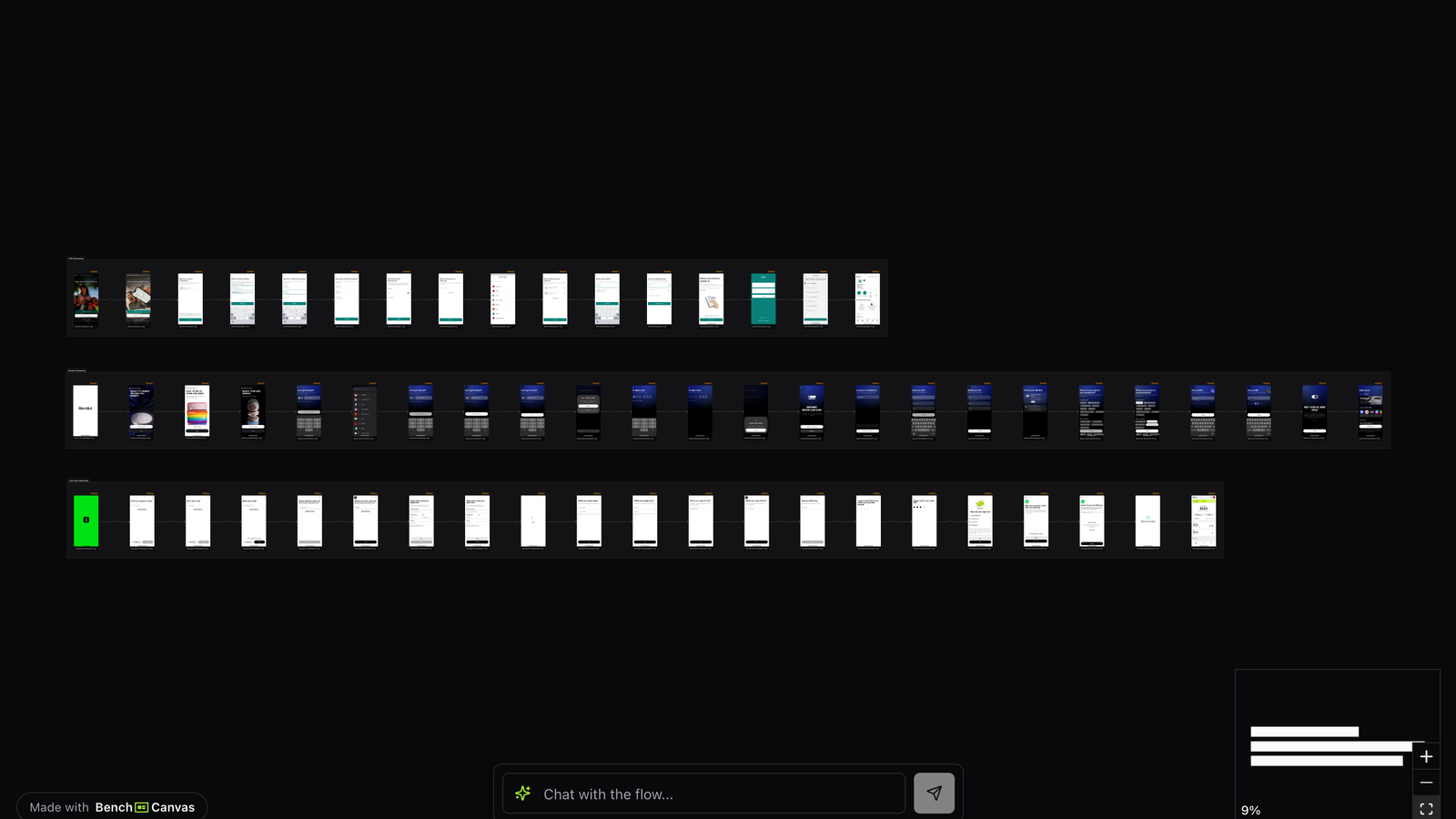
Overview
Onboarding in consumer finance has to do two jobs at once: feel easy enough to finish, and serious enough to hand over personal data. That tension is why fintech onboarding examples are so useful as design inspiration for any regulated or high-trust product.
This template helps UX designers, researchers and PMs compare activation sequences without hopping between three prototype files. You can see where each brand front-loads value, where KYC appears, and how permissions or education screens are paced.
Use it for competitive reviews, signup redesigns, or workshops where teams need a shared picture of “good enough” trust UX in fintech.
Revolut: momentum with progressive commitment
Revolut’s onboarding often pushes momentum: create an account, see product promise, then deepen verification as needed. The flow can feel ambitious because the product surface is broad, so early screens have to communicate “what you get” without overwhelming first-time users.
Look at how Revolut sequences account creation versus capability unlock. Strong fintech onboarding examples usually reveal a deliberate delay strategy: enough trust to continue, not every compliance step on screen one.
N26: calm banking confidence
N26’s sequence tends to feel more bank-like and paced. Copy, progress and form design reinforce legitimacy. Where Revolut can feel like a platform launch, N26 often feels like opening a clean financial account with fewer distractions.
That makes N26 a useful reference when your brand promise is clarity and reliability. Study how the flow explains next steps and keeps users oriented through longer verification moments.
Cash App: social-adjacent activation
Cash App’s onboarding sits closer to social and P2P habits. The product can emphasize sending, receiving or cashtag-style identity earlier, which changes what “activated” means. Trust cues still appear, but the emotional frame is peer money movement more than traditional retail banking.
If your fintech product grows through invites or networks, Cash App’s branch shows how onboarding can prioritize social utility while still collecting the data finance requires.
What they do differently
Revolut sells breadth and speed, N26 sells calm legitimacy, Cash App sells everyday money movement among people. All three are fintech onboarding examples worth stealing patterns from, but only after you decide which trust story your product is telling.
Key takeaways
- Separate “create account” from “fully verified” so activation is not blocked by every compliance step at once.
- Put a clear value promise before long forms; people endure KYC when they know why.
- Match tone to category: platform energy, bank calm, or social utility.
- Map drop-off screens visually so legal and design can negotiate the same sequence.
Related templates
- Stripe Design: Stripe’s marketing and product UX mapped screen by screen as a design benchmark.
- Streaming App UX: Disney+, Hulu and Apple TV side by side: browsing, discovery and playback mapped screen by screen.
- Linear App Design: Linear’s marketing site and product UI storytelling mapped as a visual UX flow.