Luxury Car Website Design: BMW, Mercedes, Jaguar, Land Rover & Lexus
Luxury car website design has to sell emotion before configuration. This canvas maps BMW, Mercedes, Jaguar, Land Rover and Lexus so you can compare how prestige brands handle hero storytelling, model navigation and paths toward enquiry or build.
Open public canvas: Luxury Car Brands
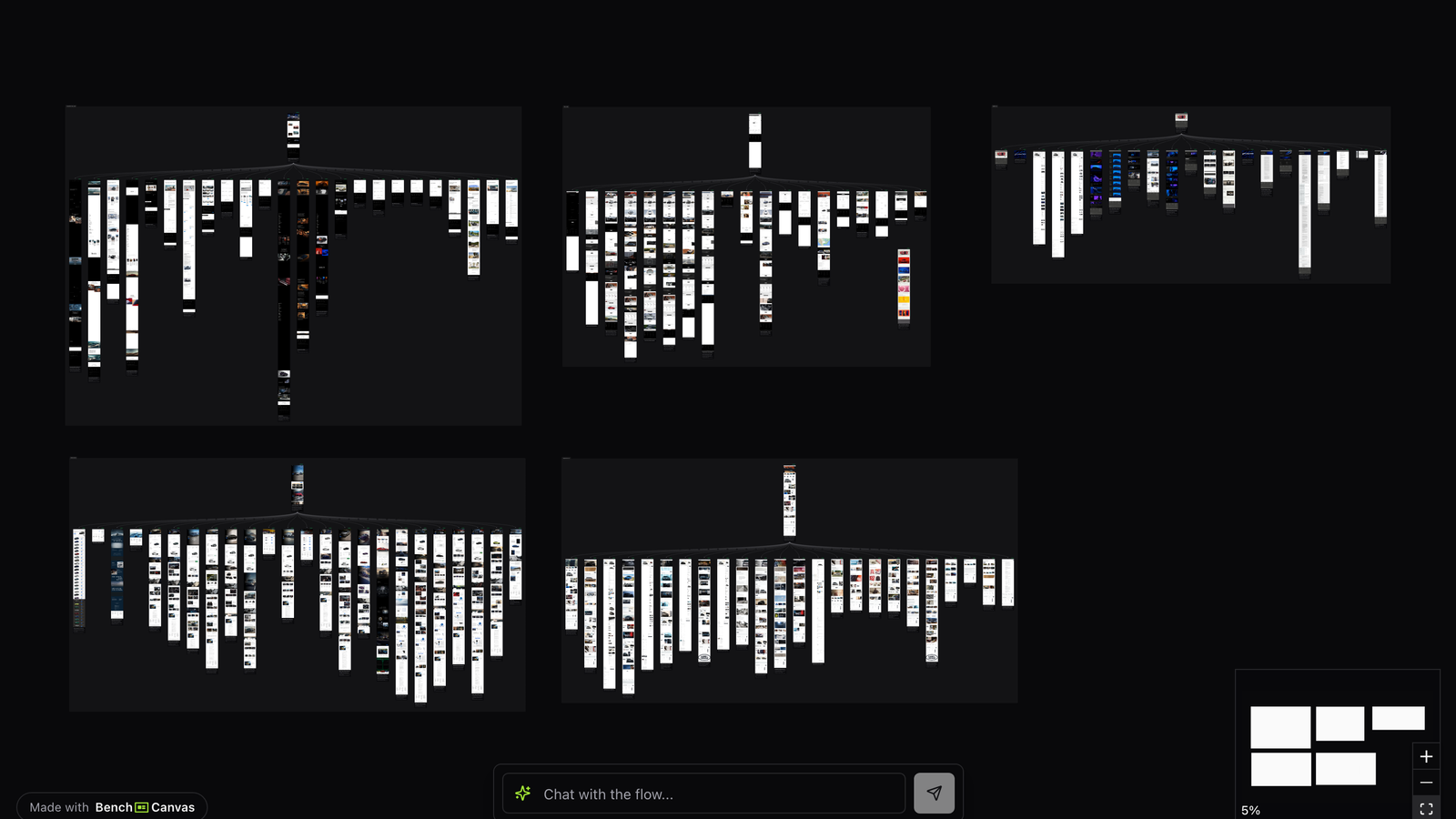
Overview
Premium automotive sites sit between brand film and ecommerce. Visitors arrive for aspiration, specs, dealers and configurators, often in the same session. Mapping those journeys side by side is one of the clearest ways to study luxury car website design decisions.
This template is for brand, UX and marketing teams working on high-consideration products. It shows how heritage, lifestyle imagery and model architecture compete for attention across five competitors.
Use it when planning a relaunch, auditing navigation IA, or aligning creative and UX on what “premium” should feel like in a browser.
BMW & Mercedes: performance and precision narratives
BMW and Mercedes typically lead with strong vehicle heroes, technology cues and model families that signal status quickly. Navigation has to support both dream browsing and practical tasks like locating a model line or dealer path.
Compare how each brand balances cinematic sections with structured model indexes. Luxury car website design often fails when the film wins and the findability loses, or the reverse.
Jaguar & Land Rover: character and terrain
Jaguar and Land Rover lean into distinct personalities: elegance and drama versus capability and adventure. Their site flows usually reinforce those stories through imagery, naming and the way model ranges are clustered.
For designers, the useful comparison is not logo treatment. It is how brand character changes information architecture and the emotional pacing of the first few screens.
Lexus: hospitality and craft
Lexus often communicates craft, comfort and service-minded luxury. The digital experience can feel more hospitality-driven than pure motorsport energy, which affects CTA language and content modules.
Studying Lexus next to German and British marques helps teams see that luxury car website design is not one aesthetic. It is a set of brand promises expressed as navigation and content rhythm.
What they do differently
Across five brands you will see different answers to the same questions: What is the first CTA? How soon does a configurator appear? Is the site a showroom, a magazine, or a lead engine? Mapping them together turns vague “premium feel” debates into concrete UX choices.
Key takeaways
- Define whether the primary job is dream, configure, or enquire before designing the homepage.
- Keep model IA scannable even when hero media is cinematic.
- Let brand character change pacing and CTA language, not only photography.
- Benchmark five competitors on the same jobs-to-be-done so prestige does not become vague feedback.
Related templates
- Nike Website Design: Nike’s journey across drops, category pages and product detail screens mapped step by step.
- Stripe Design: Stripe’s marketing and product UX mapped screen by screen as a design benchmark.
- Notion Website Design: How Notion connects AI, collaboration and product storytelling in one mapped website flow.